
The academic research center for Monmouth College in Monmouth, Illinois.
Wednesday, February 29, 2012
Research Tip! Printing from JSTOR
Printing from the database JSTOR can be tricky. If you just select print from your internet browser's window, it will only print the first page of the article that you are interested in. To print the full article, you need to download the .PDF. You can access the article .PDF file from either the search results list or the top right if you are viewing the first page of the article. Once you select download, you will have to agree to the copyright restrictions before you can view the full article to print.
Monday, February 27, 2012
Title Highlight: Plant Books and Dictionaries
Mabberley's plant-book : a portable dictionary of plants, their classification and uses
and
Timber Press dictionary of plant names
People interested in history have heard of the war between the houses of York and Lancaster for the throne of England known as the War of the Roses (1455-85), but how many people know that the actual white and red roses used as a symbol by both sides in the contest was the Damascus Rose, rosa damascena versicolor (variously colored rose) You can learn this fact and many other interesting ones in these two dictionaries, including the fact that English mustard was first ground to a wettable dust by a Mrs. Clements in 1720 and later industrialized by Jeremiah Colman (Colman’s mustard is still in stores). Both books are found in the library’s reference section.
The entries in Mabberley’s dictionary refer the user from the popular name to the genera of the plant which contains more specific information on the plant and its uses. For instance, the entry on bamboo states that the name can refer to dozens of different genera of grasses used for many things including; pipes, walking sticks, paper, flooring, window coverings and baskets. The “How to use this book” section explains how the entries in the book were put together and explains some of the terms used in the entries. A full list of the many abbreviations and symbols used in the book is found at the very end.
The Timber press dictionary is shorter and also contains references from common names to Latin names, ie., a daisy is actually a Bellis perennis, classed as a perennial herb from Europe and Western Asia. It also includes information on the derivation of the name (for instance Bellis, the genera of the daisy derives from the Latin word meaning “pretty”), the pronunciation of the word (useful with such hard to pronounce genera as Euonymous and Pachysandra) and the original location of the plant. The down side to these two books is that there are no illustrations.
It is also interesting to learn that the common names of flowers may refer to one of several plants, which is why asking for “bachelor’s buttons” at the garden center may get you Achillea ptarmica, Bellis perennis (the daisy), Centaurea cyanus, or Ranunculus acris.
and
Timber Press dictionary of plant names
People interested in history have heard of the war between the houses of York and Lancaster for the throne of England known as the War of the Roses (1455-85), but how many people know that the actual white and red roses used as a symbol by both sides in the contest was the Damascus Rose, rosa damascena versicolor (variously colored rose) You can learn this fact and many other interesting ones in these two dictionaries, including the fact that English mustard was first ground to a wettable dust by a Mrs. Clements in 1720 and later industrialized by Jeremiah Colman (Colman’s mustard is still in stores). Both books are found in the library’s reference section.
The entries in Mabberley’s dictionary refer the user from the popular name to the genera of the plant which contains more specific information on the plant and its uses. For instance, the entry on bamboo states that the name can refer to dozens of different genera of grasses used for many things including; pipes, walking sticks, paper, flooring, window coverings and baskets. The “How to use this book” section explains how the entries in the book were put together and explains some of the terms used in the entries. A full list of the many abbreviations and symbols used in the book is found at the very end.
The Timber press dictionary is shorter and also contains references from common names to Latin names, ie., a daisy is actually a Bellis perennis, classed as a perennial herb from Europe and Western Asia. It also includes information on the derivation of the name (for instance Bellis, the genera of the daisy derives from the Latin word meaning “pretty”), the pronunciation of the word (useful with such hard to pronounce genera as Euonymous and Pachysandra) and the original location of the plant. The down side to these two books is that there are no illustrations.
It is also interesting to learn that the common names of flowers may refer to one of several plants, which is why asking for “bachelor’s buttons” at the garden center may get you Achillea ptarmica, Bellis perennis (the daisy), Centaurea cyanus, or Ranunculus acris.
Saturday, February 25, 2012
ACM Photo Contest on Display
Once again, the ACM Photo Contest Results are being displayed in the library. This year's winning entries, honorable mentions, and all other entries are on display in the Current Periodicals section of the library.


You can find them all located near the Einstein Brothers Bagel shop.

The photographs will remain on display until March 30.

Friday, February 24, 2012
Database Highlight: Military and Government Collection
The Military and Government Collection is a database that is provided by EBSCO. It is a collection that provide full text articles for almost 300 journals and periodicals and provides abstracts for over 400 different journals. EBSCO describes the content:
"Designed to offer current news pertaining to all branches of the military and government, this database offers a thorough collection of periodicals, academic journals and other content pertinent to the increasing needs of these sites."It offers access to titles like:
- Air Force Comptroller
- Defence Studies
- Combat Edge
- FBI Law Enforcement Bulletin
- Foreign Affairs
- JFQ: Joint Force Quarterly
- Military Technology
- Naval Forces
Wednesday, February 22, 2012
ScotsRead recently arrived
The following titles have recently been added to the ScotsRead Collection:
- Sonoma Rose by Jennifer Chiaverini
- I've Got Your Number: A Novel by Sophie Kinsella
- Perfect Blood by Kim Harrison
- All that I am: a novel by Anna Funder
Monday, February 20, 2012
Title Highlight: A Dictionary of 20th-Century Communism
A Dictionary of 20th-Century Communism
1 volume: List of entries, Acronyms and abbreviations, Index
More of an encyclopedia than a dictionary, this volume contains numerous longer articles on different topics related to communist political ideology in the 20th century, the period of its greatest impact. The topics covered range from short biographies of communists both well-known (i.e., Mao Tse Dung, Ernesto “Che” Guevara) and unknown (i.e., Enver Hoxha, Mikhail Tukachevskii) to descriptions of types of communism (among them: Trotskyism, Stalinism, Bonapatism)
Today, with only 4 countries still espousing communist ideologies (China, North Korea, Vietnam and Cuba) it is hard to imagine the great impact that communist thought and ideology had on 20th century life and politics. Reading the entries in this book will introduce you to the ideas and people behind one of the defining political forces of the 20th century, beginning with the Russian revolution in 1917, continuing through the period of the Cold War and the fading out of communism as a political system after the fall of the Berlin wall in 1989.
An interesting observation found in the introduction to the book notes that when communists were not in power they participated in struggles for liberation and social emancipation of peoples, but, when in power uniformly established repressive and tyrannical regimes. There is a short bibliography at the end of entries containing suggestions for further reading.
1 volume: List of entries, Acronyms and abbreviations, Index
More of an encyclopedia than a dictionary, this volume contains numerous longer articles on different topics related to communist political ideology in the 20th century, the period of its greatest impact. The topics covered range from short biographies of communists both well-known (i.e., Mao Tse Dung, Ernesto “Che” Guevara) and unknown (i.e., Enver Hoxha, Mikhail Tukachevskii) to descriptions of types of communism (among them: Trotskyism, Stalinism, Bonapatism)
Today, with only 4 countries still espousing communist ideologies (China, North Korea, Vietnam and Cuba) it is hard to imagine the great impact that communist thought and ideology had on 20th century life and politics. Reading the entries in this book will introduce you to the ideas and people behind one of the defining political forces of the 20th century, beginning with the Russian revolution in 1917, continuing through the period of the Cold War and the fading out of communism as a political system after the fall of the Berlin wall in 1989.
An interesting observation found in the introduction to the book notes that when communists were not in power they participated in struggles for liberation and social emancipation of peoples, but, when in power uniformly established repressive and tyrannical regimes. There is a short bibliography at the end of entries containing suggestions for further reading.
Thursday, February 16, 2012
Search Databases by Subject
The Databases: Find Articles list on the library's website can look overwhelming with all of the choice available. However, if you are unsure which would be the best to start looking for information on your topic, you can always try the Search Databases by Subject list which breaks our database collection down into broad discipline areas to help you focus your research. The topic areas are:
- Arts & Humanities: Art, Communication, Language, Literature, Music, Performing Arts, Philosophy & Religion
- Biography
- Business & Economics
- Dictionaries & Encyclopedias: Reference
- Education
- General Research
- Government & Political Science
- Life Sciences, including Sport & Physical Education
- News & Current Events
- Physical Sciences
- Social Sciences: Anthropology, History, Psychology & Sociology
- Statistical Information
Tuesday, February 14, 2012
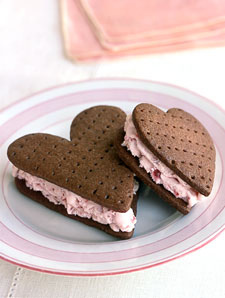
Learn more about Valentine's Day
Ever wonder about it's history, the following is from our Credo Reference Online Collection:
"St. Valentine is believed to have been a Roman priest who was martyred on this day around 270. How he became the patron saint of lovers remains a mystery, but one theory is that the Church used the day of St. Valentine’s martyrdom in an attempt to Christianize the old Roman Lupercalia, a pagan festival held around the middle of February. Part of the ancient ceremony entailed putting girls’ names in a box and letting the boys draw them out. Couples would thus be paired off until the following year. The Church substituted saints’ names for girls’ names, in the hope that the participant would model his life after the saint whose name he drew. But by the 16th century, it was once again girls’ names that ended up in the box. Eventually the custom of sending anonymous cards or messages to those one admired became the accepted way of celebrating St. Valentine’s Day." (via Credo Reference)
Learn more from Oxford Reference Online.
 |
| Photo from Wikimedia Commons. |
Learn more from Oxford Reference Online.
Valentines Day Statistics from the US Government
The U.S. Census Bureau has created a series of statistics relating to Valetines Day. You can view the full list online at their website. A few examples:
Candy
1,177
Number of U.S. manufacturing establishments that produced chocolate and cocoa products in 2009, employing 34,252 people. California led the nation in the number of chocolate and cocoa manufacturing establishments, with 135, followed by Pennsylvania, with 111. Source: U.S. Census Bureau, County Business Patterns: 2009.
$12.6 billion
Total value of shipments in 2009 for firms producing chocolate and cocoa products. Nonchocolate confectionery product manufacturing, meanwhile, was a $7.4 billion industry. Source: U.S. Census Bureau, 2009 Annual Survey of Manufactures.
24.7 pounds
Per capita consumption of candy by Americans in 2010. Source: U.S. Census Bureau, Current Industrial Reports, Confectionery: 2010.
Flowers
$375 million
The combined wholesale value of domestically produced cut flowers in 2010 for all flower-producing operations with $100,000 or more in sales. Among states, California was the leading producer, alone accounting for more than three-quarters of this amount ($286 million). Source: USDA National Agricultural Statistics Service.
17,124
The number of florists nationwide in 2009. These businesses employed 75,855 people. Source: U.S. Census Bureau, County Business Patterns.
Jewelry
24,973
Number of jewelry stores in the United States in 2009. Jewelry stores offer engagement, wedding and other rings to couples of all ages. In February 2011, these stores sold $2.27 billion in merchandise. Source: U.S. Census Bureau, County Business Patterns.
Read a few more...
Candy
1,177
Number of U.S. manufacturing establishments that produced chocolate and cocoa products in 2009, employing 34,252 people. California led the nation in the number of chocolate and cocoa manufacturing establishments, with 135, followed by Pennsylvania, with 111. Source: U.S. Census Bureau, County Business Patterns: 2009.
$12.6 billion
Total value of shipments in 2009 for firms producing chocolate and cocoa products. Nonchocolate confectionery product manufacturing, meanwhile, was a $7.4 billion industry. Source: U.S. Census Bureau, 2009 Annual Survey of Manufactures.
24.7 pounds
Per capita consumption of candy by Americans in 2010. Source: U.S. Census Bureau, Current Industrial Reports, Confectionery: 2010.
Flowers
$375 million
The combined wholesale value of domestically produced cut flowers in 2010 for all flower-producing operations with $100,000 or more in sales. Among states, California was the leading producer, alone accounting for more than three-quarters of this amount ($286 million). Source: USDA National Agricultural Statistics Service.
17,124
The number of florists nationwide in 2009. These businesses employed 75,855 people. Source: U.S. Census Bureau, County Business Patterns.
Jewelry
24,973
Number of jewelry stores in the United States in 2009. Jewelry stores offer engagement, wedding and other rings to couples of all ages. In February 2011, these stores sold $2.27 billion in merchandise. Source: U.S. Census Bureau, County Business Patterns.
Read a few more...
Monday, February 13, 2012
Title Highlight: Historical Dictionary of Animation and Cartoons
Historical Dictionary of Animation and Cartoons
1 volume: Acronyms & Abbreviations, Chronology, Appendix: Academy Award Winners, Bibliography, Illustrations (at end of book)
This short dictionary provides a look at the historical development of animation and cartoons in cinema, television and other media. The book’s lengthy introduction gives a good overview of the development of animation, which is defined as including not only cartoons in the Disney vein, but also Clay animation (Gumby, Wallace and Gromit), stop-motion using puppets(best exemplified by Ray Harryhausen and Tim Burton), and computer-generated imagery (CGI) first used in a feature film by Disney in Tron.
There are short biographies of animators, film studios, animation techniques, significant films and TV shows and even some well-known characters (including Mickey Mouse, Felix the Cat and Bug Bunny). There is only a small section of illustrations at the end of the book and the articles do not include references; these are found in the bibliography at the end of the book. The book does not just cover American animation; entries on anime, manga and European animation and animators are also found.
1 volume: Acronyms & Abbreviations, Chronology, Appendix: Academy Award Winners, Bibliography, Illustrations (at end of book)
This short dictionary provides a look at the historical development of animation and cartoons in cinema, television and other media. The book’s lengthy introduction gives a good overview of the development of animation, which is defined as including not only cartoons in the Disney vein, but also Clay animation (Gumby, Wallace and Gromit), stop-motion using puppets(best exemplified by Ray Harryhausen and Tim Burton), and computer-generated imagery (CGI) first used in a feature film by Disney in Tron.
There are short biographies of animators, film studios, animation techniques, significant films and TV shows and even some well-known characters (including Mickey Mouse, Felix the Cat and Bug Bunny). There is only a small section of illustrations at the end of the book and the articles do not include references; these are found in the bibliography at the end of the book. The book does not just cover American animation; entries on anime, manga and European animation and animators are also found.
Subscribe to:
Posts (Atom)